Fed Policy Outlook Signals Interest Rates May Stay on Hold
The Fed policy outlook is turning increasingly cautious as officials weigh persistent inflation against a slowing labor market.
A complex mix of persistent inflation and fragile employment conditions is forcing the Federal Reserve to take a cautious stance, with policymakers signaling a prolonged pause in rate changes.
NEW YORK — The Fed policy outlook remains firmly in focus as Federal Reserve Governor Christopher Waller indicated that ongoing inflation pressures and uncertainty in the labor market could keep interest rates unchanged for an extended period.
Financial markets have remained volatile amid geopolitical uncertainty and shifting policy expectations, as seen in recent movements covered in Stock Market Today.
Fed Policy Outlook Complicated by Inflation and Labor Market Risks
Speaking in Alabama, Waller underscored the difficulty of navigating an economy where price stability and employment trends are sending mixed signals. His remarks come as financial markets increasingly anticipate that the central bank will hold rates steady through much of the year.
The message was clear: until the economic picture becomes more predictable, the Federal Reserve is unlikely to make aggressive policy moves. The Iran conflict has also raised concerns about global energy flows, particularly around critical trade routes like the Strait of Hormuz.
A Delicate Balancing Act for Policymakers
Waller emphasized the challenge of managing the Federal Reserve’s dual mandate controlling inflation while supporting maximum employment. In the current environment, both sides present risks.
Inflation remains elevated, driven in part by geopolitical tensions such as the ongoing Iran conflict, as well as lingering effects from trade policies. At the same time, the labor market, while not collapsing, is showing signs of stagnation, with hiring levels slowing significantly.
The current Fed policy outlook reflects growing uncertainty around economic growth and price stability.
This combination creates a policy dilemma. Raising rates further could strain an already cautious labor market, while cutting rates too soon risks reigniting inflationary pressures.
Analysts say the Fed policy outlook now depends heavily on incoming inflation and employment data.
Waller suggested that if inflation risks continue to outweigh employment concerns, maintaining current interest rate levels may be the most prudent course.
Shifting View on the Labor Market
The Fed governor’s latest assessment marks a notable shift. Previously concerned about weakening hiring trends, Waller now sees signs that the labor market may be stabilizing at a low-growth equilibrium.
He noted that the so-called “break-even” hiring rate the level needed to keep unemployment steady may be close to zero. That suggests employers are maintaining their workforce despite limited expansion.
Still, the situation remains fragile. Businesses, he warned, are operating under tight constraints, balancing past labor shortages with uncertainty about future economic conditions. Any external shock could quickly tip the balance, leading to broader job losses.
Inflation Risks May Prove More Persistent
On inflation, Waller struck a more cautious tone than some of his colleagues. While many policymakers expect recent price pressures linked to geopolitical tensions to ease over time, he warned that the cumulative impact of multiple shocks could have longer-lasting effects.
Rising costs tied to global conflict, combined with earlier increases driven by import tariffs, may reinforce inflation expectations across the economy. Waller drew parallels to the pandemic era, when successive disruptions led to sustained price increases rather than temporary spikes.
This possibility complicates the Fed’s path forward, making premature rate cuts increasingly risky.
Context: Why Markets Expect a Pause
Financial markets have already begun pricing in a prolonged pause in rate adjustments, reflecting uncertainty around both inflation and growth. The Federal Reserve previously held its benchmark rate within a 3.5% to 3.75% range, signaling a wait-and-see approach.
Waller himself, once supportive of rate cuts, voted earlier this year to keep rates unchanged an indication of the central bank’s growing caution.
The broader economic backdrop reinforces that stance. Growth remains uneven, geopolitical risks persist, and inflation has yet to fully return to target levels.
Expert Insights: Navigating an Uncertain Economy
Economists say Waller’s comments highlight a broader shift within the Federal Reserve toward risk management rather than aggressive intervention.
Maintaining rates at current levels allows policymakers to gather more data while avoiding policy mistakes that could either stall the economy or fuel inflation. The approach reflects a recognition that the post-pandemic economy behaves differently from previous cycles, with supply shocks and global events playing a larger role.
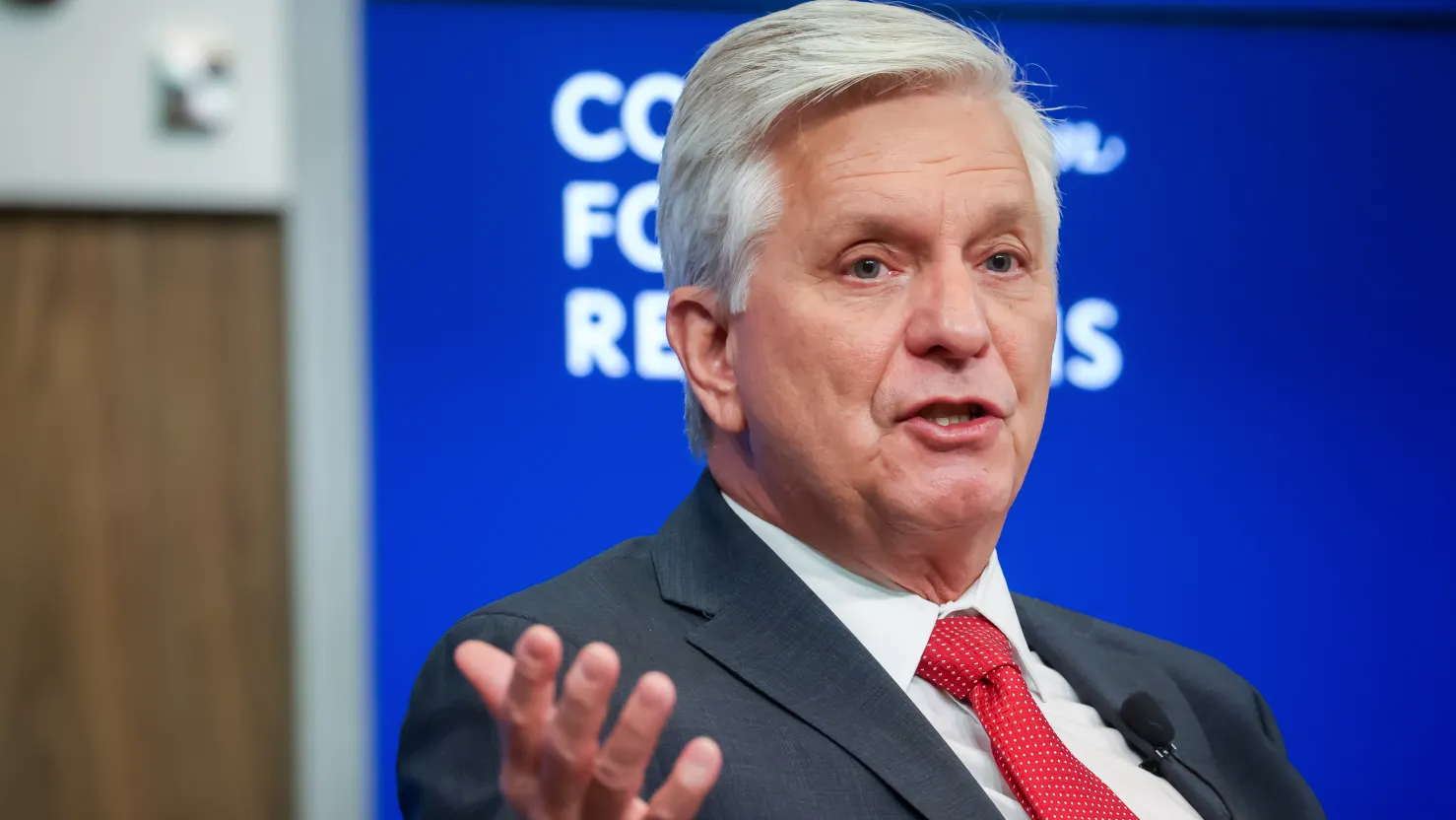
Federal Reserve Governor Christopher Waller said in a recent speech that policymakers may need to hold rates steady as risks remain elevated.
Market and Public Reaction
Investors largely interpreted Waller’s remarks as confirmation that the Federal Reserve is in no rush to change course. Equity markets showed muted reactions, while bond yields remained relatively stable, suggesting expectations were already aligned with a pause.
Among the public and business community, the message reinforces a sense of economic uncertainty. Companies remain cautious in hiring and investment decisions, while consumers continue to navigate higher prices.
A Waiting Game for the Fed
The Fed policy outlook now hinges on incoming data and evolving global conditions. With inflation risks still present and the labor market showing only limited momentum, policymakers appear prepared to hold steady rather than act prematurely.
For now, the Federal Reserve’s strategy is defined by patience an acknowledgment that in a complex and uncertain economic environment, restraint may be the most effective policy tool.
Ultimately, the Fed policy outlook suggests patience, with policymakers unlikely to act aggressively in the near term.