
World’s largest chocolate maker cuts outlook amid falling cocoa prices, industry oversupply, and geopolitical risks
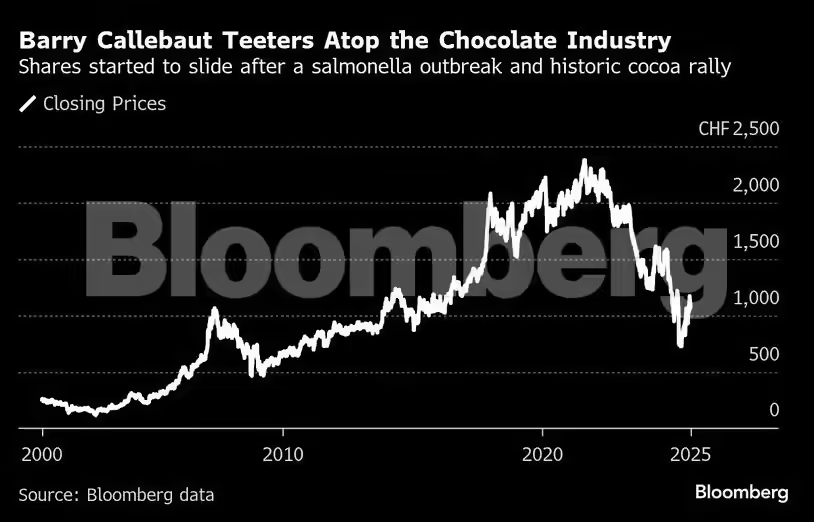
Barry Callebaut, the world’s largest chocolate manufacturer, has issued a sharp profit warning after cocoa prices plunged, triggering a steep sell-off in its stock and raising fresh concerns about instability in the global chocolate market. The company now expects earnings to decline significantly, reversing earlier optimism about a return to growth.
The Barry Callebaut profit warning comes as cocoa prices have fallen dramatically in recent months, reshaping cost dynamics across the industry. While lower input costs would typically boost margins, the speed of the decline, combined with weak demand and supply disruptions linked to geopolitical tensions, has created a challenging environment for the company.
A rapid shift in cocoa markets has left the chocolate giant navigating a complex mix of falling prices, excess industry capacity, and declining volumes factors that are weighing heavily on profitability despite improved cash flow conditions.
Cocoa Price Collapse Triggers Industry Shock
Cocoa, the primary raw material used to produce chocolate, plays a central role in determining margins for manufacturers. While falling prices can reduce production costs, sudden and steep declines often disrupt hedging strategies and inventory valuations, leading to financial pressure in the short term.
Barry Callebaut Slashes Profit Outlook
The Barry Callebaut profit warning signals a major shift in expectations for the company’s fiscal 2025–2026 performance. The firm now anticipates a mid-teens percentage decline in operating profit, a stark downgrade from projections made just months earlier.
Leadership emphasized that while the company maintains a dominant global position, it is currently facing a “turbulent period” marked by industry-wide disruption. The combination of falling prices, reduced volumes, and heightened competition has forced the company to prioritize stabilizing operations over short-term profitability.
Industry Overcapacity and Weak Demand Add Pressure
One of the key challenges highlighted in the Barry Callebaut profit warning is overcapacity within the chocolate industry. As production levels remain high while demand softens, companies are facing increased competition and pressure on pricing.
At the same time, volume declines suggest that consumer demand has not kept pace with supply. This imbalance is creating a difficult environment for manufacturers, particularly those operating at scale.
Geopolitical Risks Complicate Supply Chains
Beyond market dynamics, geopolitical developments are adding another layer of uncertainty. Disruptions linked to tensions in key global trade routes have affected commodity flows, contributing to volatility in cocoa markets.
The closure and instability surrounding critical shipping corridors have increased transportation costs and complicated supply chains, further impacting the industry’s outlook.
Market Reaction: Shares Tumble on Profit Warning
Investors reacted swiftly to the Barry Callebaut profit warning, sending the company’s shares sharply lower. The stock recorded a significant drop during trading, reflecting market concerns about weakening earnings prospects and broader industry challenges.
The decline underscores investor sensitivity to changes in commodity prices and corporate guidance, particularly in sectors heavily dependent on raw material costs.
Broader Industry Context and Economic Impact
The global chocolate market is highly sensitive to fluctuations in commodity prices, supply conditions, and consumer demand. The current environment highlights how rapidly shifting dynamics can impact even the most established players.
Stronger harvests have increased supply, keeping prices under pressure, while macroeconomic uncertainty continues to influence consumption patterns. Together, these factors are reshaping the competitive landscape and forcing companies to adapt quickly.
Expert Insights: A Market in Transition
Analysts view the Barry Callebaut profit warning as a reflection of a broader transition within the commodity and consumer goods sectors. While lower input costs may support long-term growth, the short-term adjustment period can be volatile.
Companies must navigate pricing strategies, manage inventory risks, and respond to changing demand patterns, all while maintaining operational efficiency.
Public and Industry Reaction
The developments have sparked concern among investors and industry observers, with many questioning how long the current imbalance between supply and demand will persist.
At the same time, some market participants see potential opportunities if lower cocoa prices eventually stimulate demand and restore growth momentum in the chocolate sector.
Future Outlook: Recovery or Continued Volatility?
Looking ahead, the trajectory of cocoa prices and global demand will play a decisive role in shaping the industry’s recovery. If market conditions stabilize and demand improves, manufacturers could benefit from lower costs and improved margins.
However, continued volatility, geopolitical uncertainty, and structural challenges such as overcapacity may prolong the adjustment period.
The Barry Callebaut profit warning serves as a stark reminder that even industry leaders are not immune to rapid market shifts. As the global chocolate market recalibrates, the coming months will be critical in determining whether stability returns or further disruption lies ahead.
According to recent market data from Trading Economics, cocoa prices have declined sharply over the past year. – Economic Times