
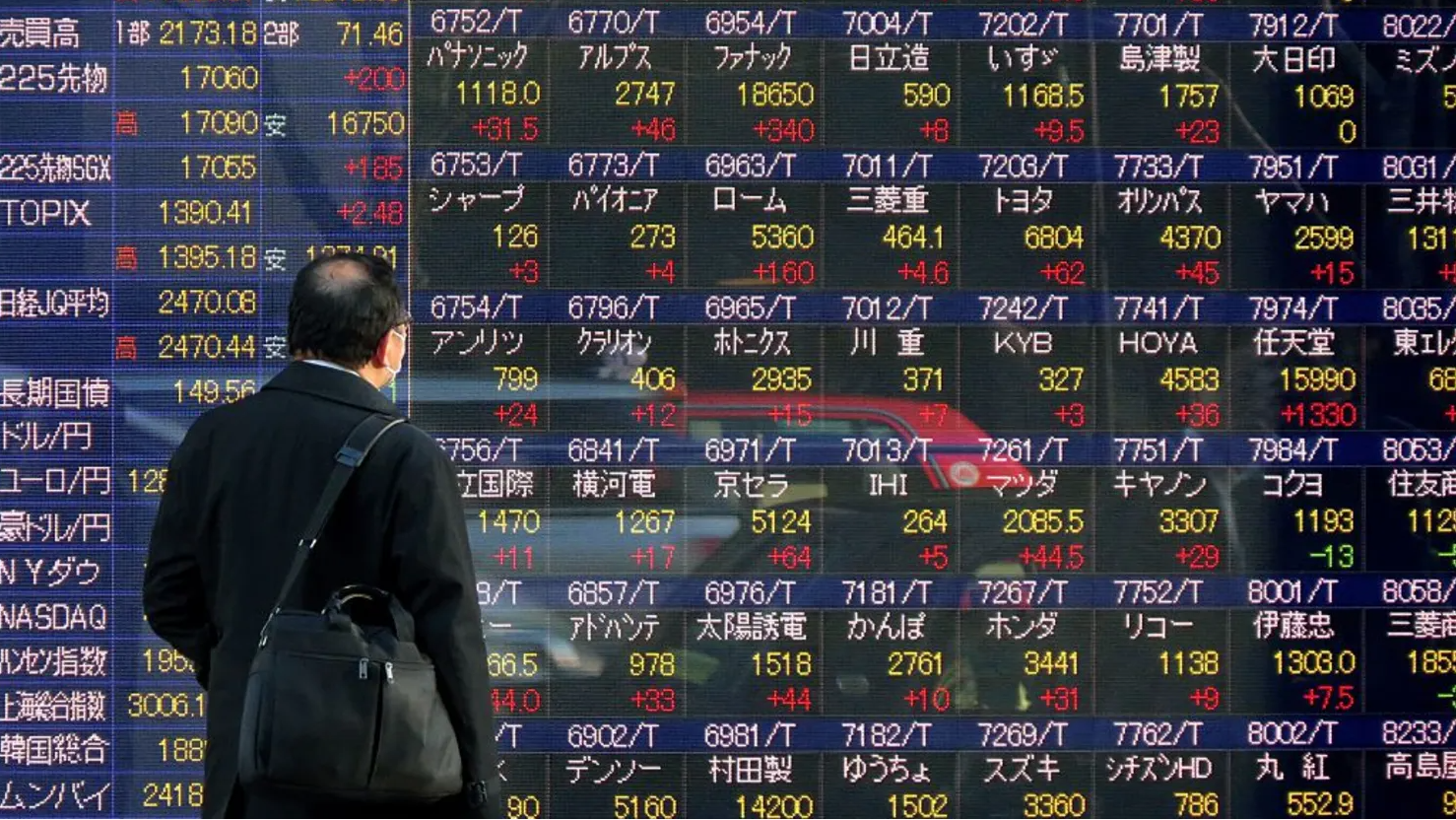
Asia markets fall as investors remain cautious despite a fragile Middle East ceasefire, pushing major regional indices lower.
Cautious optimism over easing geopolitical tensions fails to lift regional equities, even as Wall Street hits fresh record highs
Asia markets fell on Friday as investors remained wary despite signs of a potential de-escalation in the Middle East conflict. The mixed signals—hope for a ceasefire alongside lingering geopolitical uncertainty kept sentiment fragile, leading to declines across major regional indexes even as U.S. markets continued their record-breaking rally.
The cautious tone reflects a broader disconnect between global equity markets. While Wall Street pushed higher on strong momentum and tech-led gains, Asia markets struggled to sustain optimism, highlighting how geopolitical risks continue to overshadow economic fundamentals in the region.
Markets opened lower across Asia-Pacific, with declines seen in Japan, Hong Kong, South Korea, and Australia. The pullback came despite comments from U.S. President Donald Trump suggesting that the conflict involving Iran could end soon. He also pointed to progress in ceasefire agreements, including a temporary halt in hostilities between Israel and Lebanon, though details and timelines remain uncertain.
Japan’s Nikkei 225 retreated after hitting record highs a day earlier, as investors locked in profits amid heightened uncertainty. The broader Topix index also slipped, reflecting cautious positioning among institutional investors. South Korea’s Kospi moved lower in volatile trading, while Australia’s benchmark index declined modestly.
Hong Kong’s Hang Seng index led regional losses, pressured by weak sentiment and continued volatility in Chinese-linked equities. Mainland China’s markets also edged lower, signaling limited confidence among investors despite supportive policy expectations.
India stood out as a relative outperformer, with the Nifty 50 managing to post modest gains, supported by domestic flows and resilience in key sectors.
Oil markets also reflected shifting sentiment. Crude prices declined, with both Brent and West Texas Intermediate falling over 1%, as traders weighed the potential for easing supply disruptions against ongoing geopolitical risks. The drop in oil prices added another layer of complexity, as energy markets remain closely tied to developments in the Middle East.
Beyond equities, policymakers are increasingly responding to volatility in global energy markets. Japan announced a significant initiative to support energy security across Asia, with plans to deploy billions of dollars to stabilize supply chains. Officials also flagged concerns that fluctuations in oil prices are spilling over into currency markets, complicating monetary policy decisions.
Central bank signals added to the cautious mood. Bank of Japan Governor Kazuo Ueda indicated that policymakers must consider the impact of persistently low real interest rates, suggesting that any policy adjustments will remain gradual and data-dependent.
The broader global backdrop remains supportive, particularly in the United States. The S&P 500 and Nasdaq extended their record runs, with the tech-heavy Nasdaq marking its longest winning streak in over a decade. Futures tied to major U.S. indexes traded near flat levels, indicating a pause rather than a reversal in momentum.
Analysts say Asia markets fall due to ongoing geopolitical uncertainty and oil price volatility.
However, the divergence between U.S. and Asian markets underscores a key theme for investors: regional sensitivities to geopolitical developments remain significant. While U.S. equities continue to benefit from strong earnings and investor optimism, Asia is more directly exposed to shifts in global trade, energy flows, and geopolitical risk.
Analysts suggest that the market reaction reflects uncertainty rather than outright pessimism. The possibility of a sustained ceasefire could eventually support risk assets, but the lack of clarity around negotiations and the potential for renewed tensions is keeping investors cautious.
The reason Asia markets fall despite ceasefire optimism highlights fragile investor sentiment.
Market participants are also watching upcoming developments closely, including the expiration of temporary ceasefire arrangements and the potential for further diplomatic talks. Any concrete progress toward a lasting resolution could quickly shift sentiment and trigger a rebound in regional equities.
For now, the outlook remains finely balanced. Investors are navigating a complex environment where improving geopolitical headlines coexist with lingering risks, leading to cautious positioning and selective buying rather than broad-based rallies.
The coming days will be critical in determining whether Asia markets can regain momentum or continue to lag behind their global counterparts as geopolitical uncertainty persists.
The continued uncertainty explains why Asia markets fall even as global markets remain resilient.
Asia markets fall as investors react cautiously to a fragile Middle East ceasefire, with regional indices declining despite optimism around easing tensions. According to CNBC, sentiment remains mixed as geopolitical uncertainty continues to influence global markets, while additional reports highlight uneven performance across key Asian indices.